Miyamoto Tsuneichi Collected Works Vol.15 Thoughts on Japan, by Tsuneichi Miyamoto, 1973.
I. Thoughts on Japan
1. The Mindset of an Island Nation
I
I gained many insights from Katsumi Masuda’s book, “Thought in the Volcanic Archipelago(「火山列島の思想 Kazan Rettō no Shisō」)”, which examines the mindset of ancient Japanese people through the lens of classical Japanese literature.
It is true that the Japanese people possess a unique way of viewing and thinking about the world―a mindset that evolved into a culture defined by specific customs and habits. The origins of this lie in the fact that Japan is an island nation and in the habits formed by a life confined within those boundaries. Although Masuda remarked that he had originally wanted to title the book “Thoughts of a Landlocked Japanese Fish(「日本陸封魚の思い」)“, few cultural analyses have truly grasped the fundamental point that this culture emerged precisely because Japan was―and is―an island. I believe it was Professor Shinzo Mori who sought to delve deeply into this subject in his treatise on Japanese culture (found in “Selected Works of Shinzo Mori, Vol. 1”). By aptly identifying the cultural patterns that arose from the island environment, his work raises numerous issues that demand our consideration.
My own modest essay, too, owes much to the inspiration I drew from such works. I once participated in a field survey on the island of Tsushima, and during that time, I was deeply struck by a particular realization. In a place like Tsushima, there was no possibility of exiling a criminal to another location; instead, the sanction for committing a crime was to hand the offender over to a powerful local “gōshi(郷士)” – rural samurai, within the domain, forcing them to work as a slave (“yakko(奴)”) for that household. These individuals were known as “hairyo-yakko(拝領奴)” – bestowed slaves. Their labor was grueling, and few managed to complete their term and win their freedom; while some attempted to escape, they were almost invariably recaptured. Consequently, a slave originally bound for a fixed term might see that period extended indefinitely―becoming a lifelong slave―with their children subsequently inheriting that slave status.
One such “hairyo-yakko”, desperate to escape this life of servitude, wandered the island in search of a way out. Realizing that there was no solution to be found within the island’s confines, he concluded that escape was his only option; however, he was apprehended while attempting to steal a boat on the coast. That is the nature of island life; as long as one remains within that system, there is no escaping it. Even if a few individuals do manage to break free, for the vast majority who stay, the only path is to transform the system itself. To cease being a “granted serf”―a status specific to Tsushima―there was no alternative but to abolish the institution entirely. The very framework of the island imposed such conditions.
Japan, too, is an island nation. Its status as an island confines it within a vast framework. Until the advent of modern transportation, venturing beyond its shores was no easy feat. Every problem had to be resolved within the confines of the island itself.
Of course, it was not until the Meiji era that the Japanese people as a whole became conscious of living in an island nation; prior to that, few―save perhaps for rulers and intellectuals―likely gave it much thought. Yet, the constraints inherent to island life were deeply embedded in the culture passed down through generations, regardless of whether the islanders themselves were aware of them.
Ultimately, if one examines the situation closely, every individual existed in circumstances akin to those of Tsushima’s “granted serfs.” Most people simply made no attempt to break free from that system, and thus lived out their lives without ever lamenting their lot as islanders.
Yet, we must not forget the profound impact of those constraints imposed by our island existence. I have previously addressed this topic in “The Center and the Periphery of the Japanese Archipelago” (included in Volume 2 of this collection), but I wish to reflect upon it once more.
II
I have never traveled abroad. Consequently, I have never viewed Japan from across the sea. I often feel that this limitation imposes certain constraints and biases on my perspective of Japan―leading, in short, to a certain narrowness of view. I believe this, too, stems from the fact that Japan is an island nation.
Nevertheless, observing the country of Japan stirs specific reflections within me. Some have characterized Japan as a “vertical society,” while others have contrasted the Japanese people with cultures defined by meat-eating habits―views with which I, too, have previously aligned myself. There are also those who argue that Japan is a nation defined by a thoroughgoing “give-and-take” ethos. Yet, the reality cannot be so simply defined. Often, the opposite holds true. Take, for instance, the concept of “give and take”―the idea that receiving something necessitates an immediate return. While some might complain about the burden this entails, one has to wonder if such a rigid expectation was truly shared by the entire populace. Throughout my long years of travel, I have stayed in many private homes. Rarely did I leave money behind; at most, I might send a letter later. Yet, these were households I had never encountered before. Wherever I went, people spoke of “aimitagai(相身たがい)”―a spirit of mutual aid in times of trouble. While there are instances where a favor is exchanged for an immediate return, this concept implies something different: a general assurance that someone will help you when you are in need, without the expectation of a direct, immediate repayment.
I experienced this firsthand on my many journeys. When I stayed in the homes of strangers, I was never asked for payment for lodging, nor was I ever required to offer something in return. People’s genuine sentiment was simply, “Who knows when “we” might need help?”
This attitude was rooted in a sense of solidarity―an underlying awareness that we were all part of the same community. This consciousness emerged because we lived on an island surrounded by the sea, largely free from the threat of foreign enemies or other ethnic groups, and―prior to our defeat in the recent war―had never experienced military conquest.
In short, we lived continuously within the same environment among our own kind. We witnessed the rise and fall, the victories and defeats, all within that single shared setting. That is why we could believe the saying, “There are no demons in the world”―meaning that, ultimately, people are kind.
It was only after people began traveling beyond the island to see the wider world―viewing Japan from a foreign perspective―or after outsiders began visiting the island, that critics and commentators on this society emerged. Only then did we begin to truly reflect on the nature of Japan as a nation. Meanwhile, many of the nations across the sea appeared to us as magnificent lands possessing superior qualities. Korea and China―which had brought advanced culture to Japan―were indeed nations of gentlemen; they rarely attempted to threaten Japan with military force.
Moreover, whenever Japan sought culture from them, they willingly provided it. For the Japanese, it was a supreme blessing that adopting foreign ways entailed almost no sense of fear.
When the long period of national isolation ended in the Meiji era and foreign culture began to be adopted without significant hesitation, one cannot overlook the influence of a long-standing mindset that held foreign things in high regard. Everything brought from abroad was labeled “hakurai(舶来)” – imported, and since such imports were typically superior to domestic products, it was only natural for the entire nation to develop a reverence for foreign things.
Even if one were to consider a shift toward xenophobia, there were few elements of the material culture created by the Japanese themselves that could rival Western culture. Thus, the lands across the sea appeared as a dazzling, brilliant world.
Japan existed within an environment that fostered such a climate of opinion, and everyone accepted this view as a matter of course. The ideological backdrop for Japan’s policy of national isolation likely stemmed from the belief that Western culture was superior to Japan’s and that the country would be instantly overwhelmed if attacked by the West. Yet, people failed to grasp the terrifying reality that any nation possessing the power to attack would do so regardless of whether Japan was isolated or open. It was precisely this lack of understanding that made the policy of isolation possible; fortunately, neither Britain nor the Netherlands ever launched a military attack on Japan. On one hand, this naive mindset caused the nation to withdraw into a hard shell for as long as 260 years―driven by the belief that if Japan simply remained isolated and still, foreign powers would not attack. Does such a self-indulgent, naive mindset still persist today? It is not that such naivety is inherently bad. However, the general populace―sharing the same ethnicity and environment―had come to lack the disposition to harbor deep-seated suspicion toward others. The Atomic Bomb Memorial in Hiroshima stands as the ultimate testament to this. Its inscription reads: “Rest in peace, for the error shall not be repeated.” Yet, who was it that actually committed the error?
Wasn’t that very perspective―that way of thinking―prevalent among the general public? Some time after the war ended, as the U.S. military was preparing to move in for the occupation, I was working for the Osaka prefectural government. The U.S. forces were scheduled to land at Wakaura and advance into Osaka via the Kishu Kaido road. The day before, sensing a potentially tense atmosphere, I rode my bicycle along the Kishu Kaido from Osaka toward Wakayama. To my surprise, I found people out everywhere, sweeping the streets. No one, surely, had ordered them to do so.
In the past, such actions were typically reserved for occasions when the Emperor made an imperial visit. I wondered if this reflected the genuine feelings of people whose towns had been burned and whose loved ones had died in the war. Yet, their behavior was neither servile nor calculated to elicit lenient occupation policies; it stemmed simply from the sentiment that one must tidy up when guests are arriving. Deep down, I had expected to see the people’s anger manifest itself there.
The following day, as I cycled along the same route, crowds of people were lined up on both sides of the road. At a place called Takaishi, I encountered the procession of occupying troops. The people lining the road were smiling and waving. It was not a case of anger vanishing in an instant; these were the faces of people who had felt no anger to begin with.
I do not believe that all Japanese people were in such a state of mind. Yet, one cannot overlook the fact that, even in the immediate aftermath of the war, there were many people who harbored no hostility. This was because, even though a massive conflict had raged and their towns had been burned down by the enemy, they had not come face-to-face with American soldiers. They had not confronted one another while consumed by mutual hatred; the fighting had taken place far away across the ocean. This was one reason why such feelings of animosity did not arise. The situation was not necessarily the same, however, for those who actually came face-to-face with Americans on the battlefield; there were instances where defeated American soldiers were brutally killed.
Nevertheless, why was it that so many Japanese soldiers who perished on the battlefield felt no hatred toward the enemy? Instead, one observes in them a sense of genuine, unresisting resignation―an acceptance of war as an inescapable fate.
Was this sense of inescapable fate not felt even more acutely by those who were islanders? Even when facing the reality of combat, they did not strongly perceive the enemy as the specific cause of their mortal peril; rather, they viewed the forces that had driven them into that situation as “fate.”
III
One could view this as a form of resignation among the common people born of feudal society. While a way of life characterized by a lack of skepticism―accepting things simply as the natural order―is often associated with the lower strata of society, it likely stems significantly from the fact that the people faced no hostile foreign nations in their immediate vicinity.
I believe it is necessary to quietly reflect upon the living environment that fostered this kind of good-naturedness.
What, then, made the Japanese “good-natured” in a sense, or even gave rise to a trait bordering on masochism? One factor was the feasibility of national isolation (“sakoku(鎖国)”) and the people’s ability to endure it. I believe the feasibility of this isolation was deeply linked to the prevalence of small-scale farming operations characterized by a high degree of self-sufficiency.
Japan was a land where weeds grew rampantly―truly a “land of weeds.” Unless one removed the weeds, it was impossible to cultivate good crops; consequently, weeding accounted for a substantial portion of agricultural labor. This not only caused hardship for the people but also hindered the expansion of their farming operations. Yet, opening up new farmland was not overly difficult; a family could relatively easily clear enough land to sustain itself through its own efforts alone.
A wide variety of plants also emerged alongside the rampant weeds. There were fruit-bearing plants, root vegetables, plants with stalks or bark usable as fiber, timber-yielding trees, and many others; this allowed people to be self-sufficient not only in food but also in clothing and housing, producing these necessities themselves or within their communities. Thus, there was a vast amount of work beyond mere cultivation. While this prevented the expansion of individual farming operations, the situation was not limited to single households; the entire nation operated within a system of self-sufficiency. This is what made national isolation possible. It should be noted, however, that Japan was not the only country to isolate itself; Korea and Qing China existed in much the same state. This isolation made the long period of national seclusion possible; yet, during that time, not only was Japan completely forgotten by the rest of the world, but the Japanese people themselves forgot the world beyond their shores, living out a history confined to their islands. Meanwhile, the “daimyo(大名)” – feudal lords implemented peculiar systems like “sankin-kōtai(参勤交代)” – alternate attendance, which placed an immense strain on the lives of the samurai, a burden that was ultimately passed down to the common people. The reason they never even considered escaping this situation was that they lived in total isolation from the outside world.
While samurai society was bound together in a massive swirl centered on Edo, a separate “vortex” with its own distinct center emerged within the society of the common people: the pilgrimage to the Ise Grand Shrine.
One can gain insight into the nature of these Ise pilgrimages through Toshio Fujitani’s recent book,「おかげまいりとええじゃないか Okage-mairi to Ee ja nai ka(Iwanami Shinsho)」. Historical records indicate that major waves of pilgrimage occurred in 1650, 1705, 1718, 1723, 1771, and 1830, with millions of people making the journey to Ise on each occasion. Yet, it was not only during these peak years of the “Okage-mairi(おかげまいり)” – mass pilgrimage, phenomenon that people traveled to Ise; hundreds of thousands walked the roads there during ordinary years as well―coming from as far north as Hokkaido and as far south as the vicinity of Amami Oshima. Even the Ainu people made the pilgrimage. While various theories have been proposed regarding the motivations behind this, I believe that―beyond any specific rationale―a closed society sharing a common culture possesses an inherent nature that compels it to seek out a central focal point. Each region establishes its own center and revolves around it; such is the nature of culture. These small vortices eventually grow larger.
The samurai class formed castle towns that were linked toward Edo, yet the common people did not merge into that particular vortex. The distinctive character of Edo-period culture lay in the fact that the common people created their own vortex outside that system. Moreover, the mutual cooperation among the common people―who might have appeared powerless at first glance―was actually far stronger. While “daimyo” and samurai traveled with an air of imposing authority, relying on their power and status, the common people traveled in a different spirit, forging bonds of shared humanity along the way. Beyond the organized “Okage-mairi” pilgrimages, there were those who undertook “nuke-mairi(ぬけまいり)” – secretly slipping away, from home to walk the road to Ise; such travelers could hardly have carried much money, often setting out with little more than the clothes on their backs. We must not forget the many ordinary people who supported them, making it possible for them to complete their journeys.
To cite a modest example, my own family provided “zengen-yado(善根宿)” – lodging offered free of charge to Ise pilgrims, religious devotees, and general travelers. We accepted absolutely no payment. We simply shared the same food we ate ourselves with our guests before sending them on their way the next morning; dinner might be taro porridge or perhaps just the leftover barley rice from lunch. My family was not wealthy, yet we hosted many people. Upon leaving, travelers would simply say, “Thank you,” without us ever learning their names or origins, and no letters or postcards of thanks ever followed. As a child, I knew hundreds of people who stayed with us in this manner. I remember that our home was desperately poor―destitute, even―yet we never once begrudged the hospitality; indeed, the house would fill with light and cheer during dinner as the travelers shared their stories.
Although the custom of “zengen-yado” eventually vanished as commercial inns appeared in the village, my family was by no means unique; such households were found all across the country. It was this spirit of hospitality that made travel possible for the common people. Pilgrimages like the journey to Ise were made possible by this same social climate; furthermore, while similar pilgrimages were undertaken to various regions, Ise stood at the very heart of them all. Was it not mutual trust that made such extraordinary journeys possible? Although these travels were accompanied by various drawbacks and even unfortunate incidents, these were merely isolated occurrences; overall, one could witness the wisdom of the common people. According to family tradition, my own household accommodated travelers for over 150 years, yet hardly a single accident ever occurred.
Such circumstances inevitably fostered a specific worldview among the people: a spirit of mutual aid―the sentiment that “we are all in this together.” Underlying this philosophy, I believe, was the fact that most people led similar lives―specifically, lives based on independent, small-scale farming. Even where large landowners existed, they did not typically manage vast estates themselves; instead, they leased land to tenant farmers, and very few households managed more than five hectares of land on their own.
While these small farming units existed as individual entities, there were many times―such as during emergencies or peak labor seasons―when a single household could not cope on its own. It was the village community that addressed these challenges. Labor shortages were resolved through the exchange of manpower―practices known as “yui” or “temagae”―and groups of neighbors would often band together to provide the necessary resources for tasks requiring cooperative effort, such as house construction or funerals. We must not forget that even in regions like Tohoku and Hokuriku, where landlords and bosses held significant power, such cooperation existed among the farmers themselves. They developed the ability to resolve their own problems independently―an approach that might well be viewed as a philosophy of self-reliance.
Japan’s policy of national isolation was by no means a happy development for the common people. While their situation differed fundamentally from that of the samurai class―who complacently benefited from the status quo―the way of life among the peasantry that made this long period of isolation possible did not originate with the policy itself; rather, that lifestyle existed prior to isolation and was the very foundation that allowed such isolation to be sustained. In light of this, I believe it is necessary to distinguish between the fundamental aspects of the samurai mindset and the mindset of the common people.
IV
I believe that the people who have sustained the nation of Japan to this day are the common folk―those who spoke the least. Moreover, they were unaware of this role themselves. Yet, I feel that the true nature of Japan resided in their way of life. Living on an island rarely subjected to attacks by foreign peoples, the common people had little need to arm themselves. The Japanese samurai class did not emerge to defend against external enemies; rather, it arose from internal armed conflict among the people themselves. Consequently, the samurai did not stand on the side of the common people from the outset―a fact that cannot be overlooked. To the common people, they were an unnecessary presence. The abolition of the samurai class during the Meiji Restoration was a factor of paramount importance and a victory for the common people; it was through the elimination of the samurai that the unification of the nation was achieved.
Furthermore, the Edict Abolishing Sword-Wearing was issued in the fifth year of Meiji (1872). Not only were samurai stripped of the swords at their waists, but the common people were also disarmed; with the exception of military personnel and police officers, the populace became entirely unarmed. Although there was some resistance, in a Japan where the majority were farmers, this shift seemed quite natural. While one could argue that being unarmed made it easier for the authorities to maintain control, the common people found a profound sense of relief in being unarmed themselves. Yet, the impact of this edict on the populace was immense, fostering the mindset that one could achieve anything through one’s own efforts alone. The ethos of personal advancement and success also emerged from this context.
This groundbreaking reform proceeded smoothly because it was underpinned by the mindset of the agrarian population; in contrast, even today, the United States cannot bring itself to make people give up the pistols they carry at their sides. I believe that true democracy cannot exist where such things persist.
The Meiji era began with everyone becoming unarmed. We must not forget that the ideology behind this disarmament was rooted in the way of life of the common people during the Edo period―and, going back even further, in a long history of living without the constant threat of foreign invasion. It was not until the Meiji era that we began to be conscious of external enemies; furthermore, this awareness did not arise from the people sensing the threat firsthand―rather, it was a sentiment felt by the government and military and subsequently imposed upon the populace.
After the Russo-Japanese War, a camp for Russian prisoners of war was established along the coast at Hamadera and Takaishi in Osaka Prefecture. Although the site was enclosed by wire fencing, local farmers would cross the barrier to engage in human interaction with the prisoners. If a prisoner gestured that he was hungry, a farmer would bring him rice balls; if he signaled a desire for tobacco, a farmer would buy some for him. While the prisoners could offer little in return, the local farmers, moved by pity, did whatever they could to help. Before the war, quite a few farming households in the area possessed Russian ruble banknotes and copper coins known as kopecks. Although these currencies held no value in village society, they remained in people’s possession until the pre-war period as tangible proof of the close, personal exchanges that had taken place.
By the time of the Pacific War, this simple spirit of mutual compassion had significantly faded, though it had not vanished entirely. This was because we did not harbor an intense, visceral hatred toward the enemy as such.
A sense of ease―stemming from being unarmed―fostered an open nature among the people. Village life is sometimes characterized as secretive, rife with hidden matters and a gloomy, oppressive atmosphere. I do not deny that such aspects existed. Yet, the reality that people lived in homes they barely bothered to lock at night speaks to an openness that far outweighed those darker traits.
Even during the Edo and Meiji periods―times far more unstable than today―people could sleep soundly in their homes without taking elaborate measures to lock their doors. Living as “landlocked fish”―confined to a narrow world―fostered a certain insularity in their thinking, which in turn shaped the very nature of the writings they produced; yet, it was precisely this existence that cultivated a trusting heart and created a world where one could live unarmed. While some city dwellers might imagine that such a peaceful existence is maintained by the might of soldiers or police, few among the villagers believe this. The people learned―from the very day they laid down their arms―that peace is not something achieved through such means.
I believe that the adoption of Japan’s “unarmed” constitution was made possible because the people already possessed an innate sense of what it meant to live unarmed, and that the public sentiment supporting that constitution sprang from this very way of life. In the debate over self-defense, there is an argument often likened to “locking the door”: if the door is left unsecured, a thief will break in; therefore, the nation, too, must arm itself for self-defense. Yet, the truth is that if the head of the household is steadfast―or if society itself is sound―no thief will enter, even if one sleeps with the door wide open.
This truth was discovered through that long history of living as “landlocked fish”―but is it impossible to share that mindset and way of life with the rest of the world?
It seems to me that while rulers devise various schemes to posture aggressively, maintain appearances, and safeguard their own authority, the common people―quite apart from all that―are discovering a unique way of life and a distinct ethic born from their own environment.
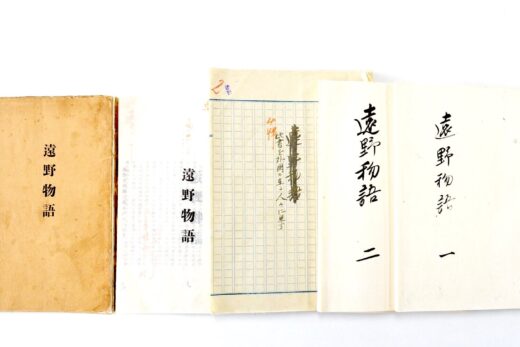
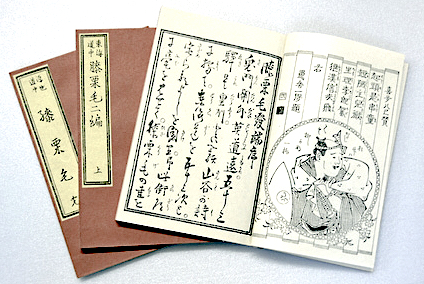
宮本常一著作集 15 『日本を思う』宮本常一著(未來社 1973)
一 日本を思う/ 1 島国の心情/2 古きものの拘束/3 無性格国家ニッポンの由来/4 小土地経営と近代化/5 家々の崩壊/6 われら凹文化民族/7 閉された海の手前で/8 ものいわぬ漁民たちの活躍/9 われらの荒々しき血の行くえ